
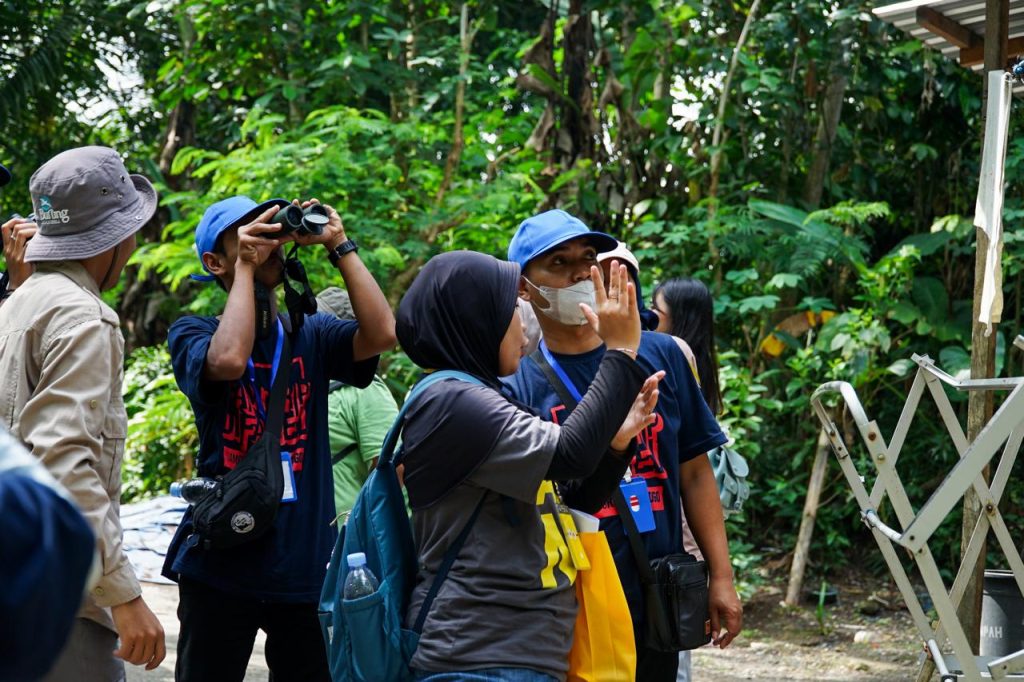
Travel is not experienced in the same way by everyone. A forest that is mostly visual for one traveler may be discovered through scent, texture, sound and touch by another. Research with visually impaired travelers found that auditory, tactile and physical participation can be particularly important in shaping their travel experiences (Qiao et al., 2021). A specialty guide understands this difference. Their role is not simply to explain what is there, but to translate an experience so that it can be understood and accessed by the particular traveler standing beside them.
The Guide as a Human Bridge
Sometimes accessibility is surprisingly human. It can be a hand guiding another hand towards a tea leaf, someone describing the shape and distance of something that cannot be seen, or a story moving through sign language in the middle of a crowded street. Tomej and Duedahl (2023) describe accessibility in tourism as relational: our interactions with other people can enable or constrain how we experience a place. A specialty guide becomes that human bridge—not experiencing the destination for the traveler, but finding the way for the traveler to experience it themselves.
When Travel Becomes More Complex
The more complex the journey, the more important specialization becomes. Guiding through a heritage quarter, accompanying someone with limited mobility, interpreting for a Deaf traveler, supporting a blind traveler in nature, or assisting a disabled diver underwater do not require the same knowledge. Research from Indonesia has also found that travelers with disabilities continue to encounter unaccommodated needs, difficulty travelling independently, and a lack of awareness and empathy within tourism (Reindrawati et al., 2022). In these situations, goodwill alone is not enough. Different travelers and different environments require different expertise.
References
Qiao, G., Zhang, J., Pabel, A., & Chen, N. (2021). Understanding the factors influencing the leisure tourism behavior of visually impaired travelers: An empirical study in China. Frontiers in Psychology, 12, 684285. https://doi.org/10.3389/fpsyg.2021.684285
Reindrawati, D. Y., Noviyanti, U. D. E., & Young, T. (2022). Tourism experiences of people with disabilities: Voices from Indonesia. Sustainability, 14(20), 13310. https://doi.org/10.3390/su142013310
Tomej, K., & Duedahl, E. (2023). Engendering collaborative accessibility through tourism: From barriers to bridges. Annals of Tourism Research, 99, 103528. https://doi.org/10.1016/j.annals.2023.103528